dog blog
Dog Bowl Stand Comparison

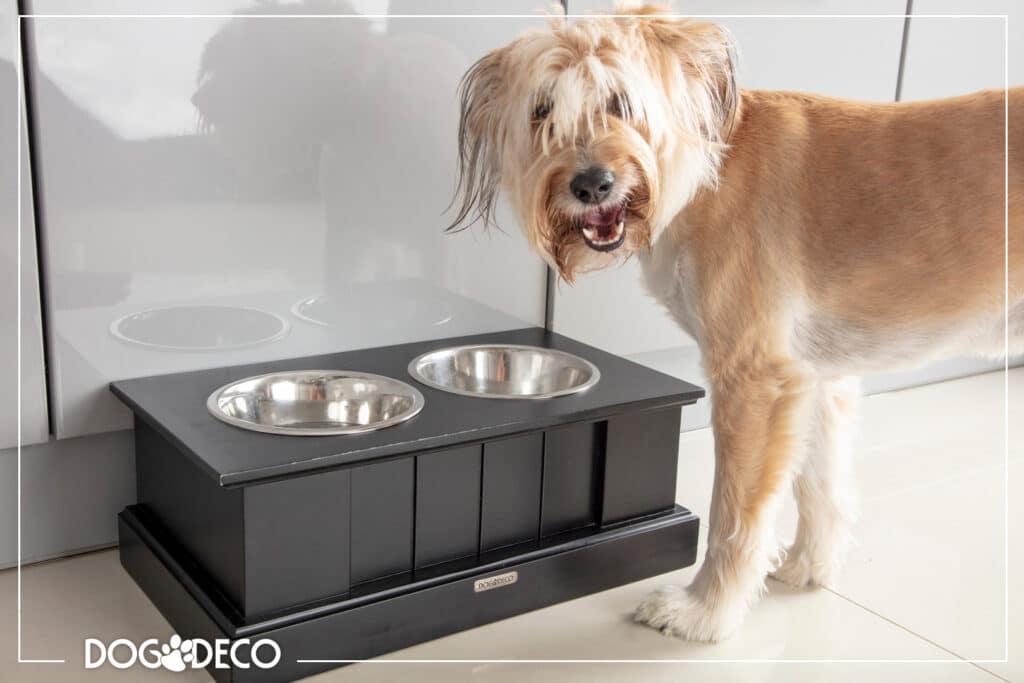
A dog bowl stand is an essential accessory for large dogs, senior pets, and dogs with joint problems. But which bowls are best for big breeds – metal, plastic, or ceramic? And which dogs actually need an elevated stand?

Table of Contents
Why use a dog bowl stand?
Should bowls be placed on a stand or directly on the floor? It’s a controversial topic that divides both dog owners and veterinarians. Supporters and critics alike have strong arguments.
In the past, dogs ate from the floor – but their lives were very different. They were often working animals, fed scraps, living outside or in barns. That was then.
Today’s urban dogs live in much more human-like conditions. Changes in lifestyle, diet (specialized dry and wet food, treats, and supplements), and health awareness have transformed their needs. So, should modern dogs still eat from the floor?
Large and giant breeds are predisposed to joint and spinal issues. Constantly bending down to eat or drink puts extra strain on their bodies. Senior dogs, like older people, also need more comfort. Why not make mealtimes easier for them?
In the past, there were no raised bowls – just like there were no orthopedic beds or no-pull harnesses. But today we have them, and many dogs benefit. Elevated feeding can help reduce stress on the spine and joints.
Important: bowls should not be placed too high, as this can lead to digestive problems. So far, no reliable studies have proven that raised bowls cause bloat in predisposed breeds.
Which bowls are best for large dogs?
Dog bowls vary in shape and purpose:
- Wide and shallow bowls – perfect for brachycephalic breeds (short muzzle, wide eyes) such as Boxers, French Bulldogs, or Bullmastiffs.
- Deep, cone-shaped bowls – ideal for long-eared breeds like Bloodhounds, Afghan Hounds, and Irish Setters, as they help keep ears clean.
- Medium-depth bowls – balanced proportions, suitable for most large and giant dogs.
Choosing the right bowl size
- To calculate the right bowl capacity, multiply your dog’s meal portion by 4. That gives you the correct volume.
- Approximate sizes by weight:
- Small dogs up to 8 kg (Dachshund, Shih Tzu, Bichon, Pug, Spitz) → ~0.9 L bowls.
- Medium dogs 8–20 kg (Beagle, Shar Pei, Amstaff, Schnauzer) → 0.9–1.8 L bowls.
- Large and giant dogs (German Shepherd, Husky, Great Dane, Mastiff, Akita, Retriever, Bernese Mountain Dog, St. Bernard) → 1.8–2.8 L bowls.
- Choose bowls suited to your dog’s size, age, and anatomy. While many owners use bowls of equal size for food and water, opting for a larger water bowl helps prevent spills.
Metal and oak dog feeder STRATUS (Kopiuj)
Dog feeder with oak top and steel legs ARCANA
Metal and oak dog feeder STRATUS
Solid oak dog feeder VENOM
Elegant wooden dog feeder ROBUST with bowls
Metal, plastic, or ceramic bowls on stands?
- Plastic bowls – lightweight and colorful, but scratch easily, harbor bacteria, may absorb odors, and can cause allergies.
- Metal bowls – durable, hygienic, easy to disinfect, and stable (especially in wooden stands). Long-lasting and rarely cause allergies.
- Ceramic bowls – smooth, non-allergenic, and easy to clean. Attractive and heavy enough to stay in place, but fragile if dropped or chipped.
Which dogs benefit most from a raised bowl stand?
The debate around elevated bowls and bloat risk continues, and science has not reached a clear verdict. If your dog is prone to digestive issues, consult your vet before switching.
Still, most experts agree that raised bowls are especially helpful for:
- Senior dogs and those with spinal problems.
- Large and giant breeds, who benefit from reduced strain while eating.
- Dogs with joint issues or those that struggle to eat from floor level.
- Breeds predisposed to dysplasia or skeletal problems, where prevention matters.
A raised feeding area can also look stylish – for example, pairing a wooden food container with matching bowls on a stand.
Dog bowl stand – usefulness evaluation
Elevated stands aren’t just convenient for dogs – they help owners too. Less bending means less back strain, which is especially valuable for senior owners or people with health issues.
Benefits include:
- Less food and water spilled on the floor.
- Easier cleaning.
- Reduced splashing for messy drinkers.
Solid, stable stands (wood or metal) are generally better than adjustable ones, which can wobble and make dogs hesitant to eat.
Summary
A dog bowl stand can make a real difference. Choosing the right material, size, and design ensures better comfort, hygiene, and healthier eating habits. While not every dog needs one, large, senior, and joint-problem dogs can greatly benefit from raised bowls. A well-matched stand is not only practical but also a stylish addition to your home.